FR~U artist in residence programme
Invited artists: Anu Vahtra (EE), Winnie Herbstein (NL,GB), and Filip Jovanovski (MK)
The residency departed from and drew on already conceived research concerning the main square in the city centre of Skopje, developed in the context of the infamous urbanistic and architectural plan Skopje 2014, as well as other public spaces and modernist architectural heritage. The new endeavour — inviting two artists from different socio-political backgrounds to work closely with artist Filip Jovanovski and curator Ivana Vaseva — engaged with the envisioned content of Kenzo Tange's master plan from 1965, bringing it into dialogue with the recent transformations of the urban landscape by the Skopje 2014 project (2009–2017), and connecting these ideas to posthuman theories of community building as a way of imagining a different urban identity for the city.

As a site of considerable prominence and potential, the central public square of Skopje has undergone a fraught history. Originally conceived as two connected spaces — Square Marshal Tito and the adjacent Square Freedom, as envisioned in Kenzo Tange's master plan — only Square Marshal Tito remained active, later renamed Square Macedonia, or critically referred to as the Square of the Kitsch,[1] in reference to the eclectic and widely contested revamping of the city centre. In this process, the square not only lost its historical memory but also saw the erosion of public debate and the displacement of the people who lived or circulated there — effectively hollowing out the public space itself. In the new millennium, rather than a revival of Square Freedom, a new square was erected: first Square Filip II,[2] and subsequently Skanderbeg Square.[3]
The artists' residencies took place across different time periods, with local artist Filip Jovanovski serving as a connecting thread throughout. As Anu Vahtra and Winnie Herbstein were visiting Skopje for the first time, and arriving from different socioeconomic and political contexts, the residency began as a period of contemplation — a broader research into the ideas presented beforehand, and an attempt to find parallels and correspondences with their own artistic practices. The overarching aim was to develop a research-based context that could envision a different city: a more humane and caring city, freed from nationalistic, religious, and profit-oriented frameworks — one that could give room to the re-politicisation of its squares and public spaces and, ultimately, to a meaningful engagement with the unresolved legacy of Skopje 2014 and all its ramifications. Through the lens of posthuman urbanism — a significant concept for reimagining the meaning of urban space — the residency posed the question: how can we change ourselves in order to change the way we live with others, both human and non-human, in a rapidly urbanising world?
Prior to their residencies, both Anu Vahtra and Winnie Herbstein conducted online and offline research, reading publications and texts produced by FR~U members and others working on related topics.
During her three-week stay in Skopje (6–27 November 2023), Anu met several people actively involved in protests against the Skopje 2014 project, including Nikola Naumoski of the activist choir Raspeani Skopjani and the Freedom Square organisation, the art group OPA (Obsessive Possessive Aggression), and art historian Vladimir Janchevski of KOOPERACIJA, now curator at the Museum of Contemporary Art Skopje. She also visited potential exhibition venues, attended events at the MOT theatre festival, and followed Filip's collaborative theatrical installation The City as a Stage (16–18 November 2023).
During her three-week stay (18 March–7 April 2024), Winnie met activists and cultural practitioners engaged with public space and urban politics, including Jana Brsakoska of Cityscapes, Simona Dimkovska of Cultural Echo, initiators of the music initiative The Strength is in Young People, and Kristina Lelovac of the feminist festival TIIT!INC. She also visited potential exhibition venues and attended various cultural events.
Filip's residency ran concurrently with those of Anu and Winnie. His work centred on the establishment of the Laboratory for Performative Space Research at the Faculty of Architecture in Skopje — an extracurricular initiative aimed at stimulating young people to reclaim and preserve public spaces as sites of plurality and collective action. Both Anu and Winnie engaged with this process, meeting international partners and attending meetings with students. Throughout, the primary methods employed were formal and informal meetings and discussions offering critical overviews of the local context.
Through their peripatetic presence in Skopje, their embodied engagement with its spaces, the residency was ultimately an endeavour about the collective identity of the city — shaped by the visions of three artists who embraced the role of the decolonising flâneuse.
¹ "Square of the Kitsch" was the name given to the main square in Skopje's city centre following the government-initiated project "Skopje 2014," during which 136 structures were introduced in and around the square referencing baroque and neo-classical architectural styles, executed in poor materials such as polystyrene, plaster, and fake marble.
² Square Philip II forms part of the structures built under "Skopje 2014." Until 2013, the site now occupied by Square Philip II was known as Karposh's Uprising Square.
³ Skanderbeg Square can be understood as a counter-narrative from the Albanian community to the predominantly Macedonian Skopje 2014 project.

The residency departed from and drew on already conceived research concerning the main square in the city centre of Skopje, developed in the context of the infamous urbanistic and architectural plan Skopje 2014, as well as other public spaces and modernist architectural heritage. The new endeavour — inviting two artists from different socio-political backgrounds to work closely with artist Filip Jovanovski and curator Ivana Vaseva — engaged with the envisioned content of Kenzo Tange's master plan from 1965, bringing it into dialogue with the recent transformations of the urban landscape by the Skopje 2014 project (2009–2017), and connecting these ideas to posthuman theories of community building as a way of imagining a different urban identity for the city.
As a site of considerable prominence and potential, the central public square of Skopje has undergone a fraught history. Originally conceived as two connected spaces — Square Marshal Tito and the adjacent Square Freedom, as envisioned in Kenzo Tange's master plan — only Square Marshal Tito remained active, later renamed Square Macedonia, or critically referred to as the Square of the Kitsch,[1] in reference to the eclectic and widely contested revamping of the city centre. In this process, the square not only lost its historical memory but also saw the erosion of public debate and the displacement of the people who lived or circulated there — effectively hollowing out the public space itself. In the new millennium, rather than a revival of Square Freedom, a new square was erected: first Square Filip II,[2] and subsequently Skanderbeg Square.[3]
The artists' residencies took place across different time periods, with local artist Filip Jovanovski serving as a connecting thread throughout. As Anu Vahtra and Winnie Herbstein were visiting Skopje for the first time, and arriving from different socioeconomic and political contexts, the residency began as a period of contemplation — a broader research into the ideas presented beforehand, and an attempt to find parallels and correspondences with their own artistic practices. The overarching aim was to develop a research-based context that could envision a different city: a more humane and caring city, freed from nationalistic, religious, and profit-oriented frameworks — one that could give room to the re-politicisation of its squares and public spaces and, ultimately, to a meaningful engagement with the unresolved legacy of Skopje 2014 and all its ramifications. Through the lens of posthuman urbanism — a significant concept for reimagining the meaning of urban space — the residency posed the question: how can we change ourselves in order to change the way we live with others, both human and non-human, in a rapidly urbanising world?
Prior to their residencies, both Anu Vahtra and Winnie Herbstein conducted online and offline research, reading publications and texts produced by FR~U members and others working on related topics.
During her three-week stay in Skopje (6–27 November 2023), Anu met several people actively involved in protests against the Skopje 2014 project, including Nikola Naumoski of the activist choir Raspeani Skopjani and the Freedom Square organisation, the art group OPA (Obsessive Possessive Aggression), and art historian Vladimir Janchevski of KOOPERACIJA, now curator at the Museum of Contemporary Art Skopje. She also visited potential exhibition venues, attended events at the MOT theatre festival, and followed Filip's collaborative theatrical installation The City as a Stage (16–18 November 2023).
During her three-week stay (18 March–7 April 2024), Winnie met activists and cultural practitioners engaged with public space and urban politics, including Jana Brsakoska of Cityscapes, Simona Dimkovska of Cultural Echo, initiators of the music initiative The Strength is in Young People, and Kristina Lelovac of the feminist festival TIIT!INC. She also visited potential exhibition venues and attended various cultural events.
Filip's residency ran concurrently with those of Anu and Winnie. His work centred on the establishment of the Laboratory for Performative Space Research at the Faculty of Architecture in Skopje — an extracurricular initiative aimed at stimulating young people to reclaim and preserve public spaces as sites of plurality and collective action. Both Anu and Winnie engaged with this process, meeting international partners and attending meetings with students. Throughout, the primary methods employed were formal and informal meetings and discussions offering critical overviews of the local context.
Through their peripatetic presence in Skopje, their embodied engagement with its spaces, the residency was ultimately an endeavour about the collective identity of the city — shaped by the visions of three artists who embraced the role of the decolonising flâneuse.
¹ "Square of the Kitsch" was the name given to the main square in Skopje's city centre following the government-initiated project "Skopje 2014," during which 136 structures were introduced in and around the square referencing baroque and neo-classical architectural styles, executed in poor materials such as polystyrene, plaster, and fake marble.
² Square Philip II forms part of the structures built under "Skopje 2014." Until 2013, the site now occupied by Square Philip II was known as Karposh's Uprising Square.
³ Skanderbeg Square can be understood as a counter-narrative from the Albanian community to the predominantly Macedonian Skopje 2014 project.
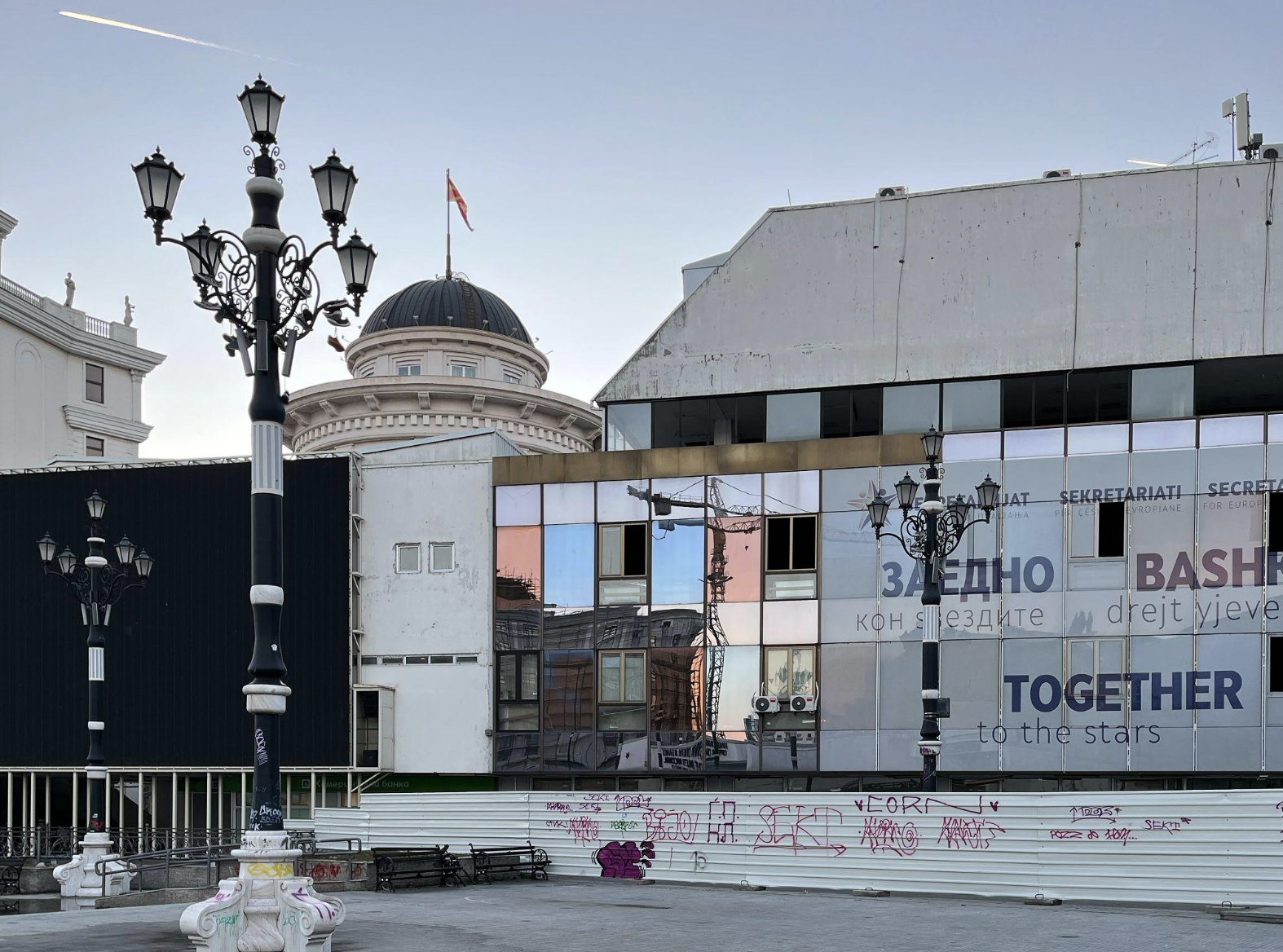
Anu Vahtra’s research, focusing on the contested public spaces of Skopje. Photo by Anu Vahtra.
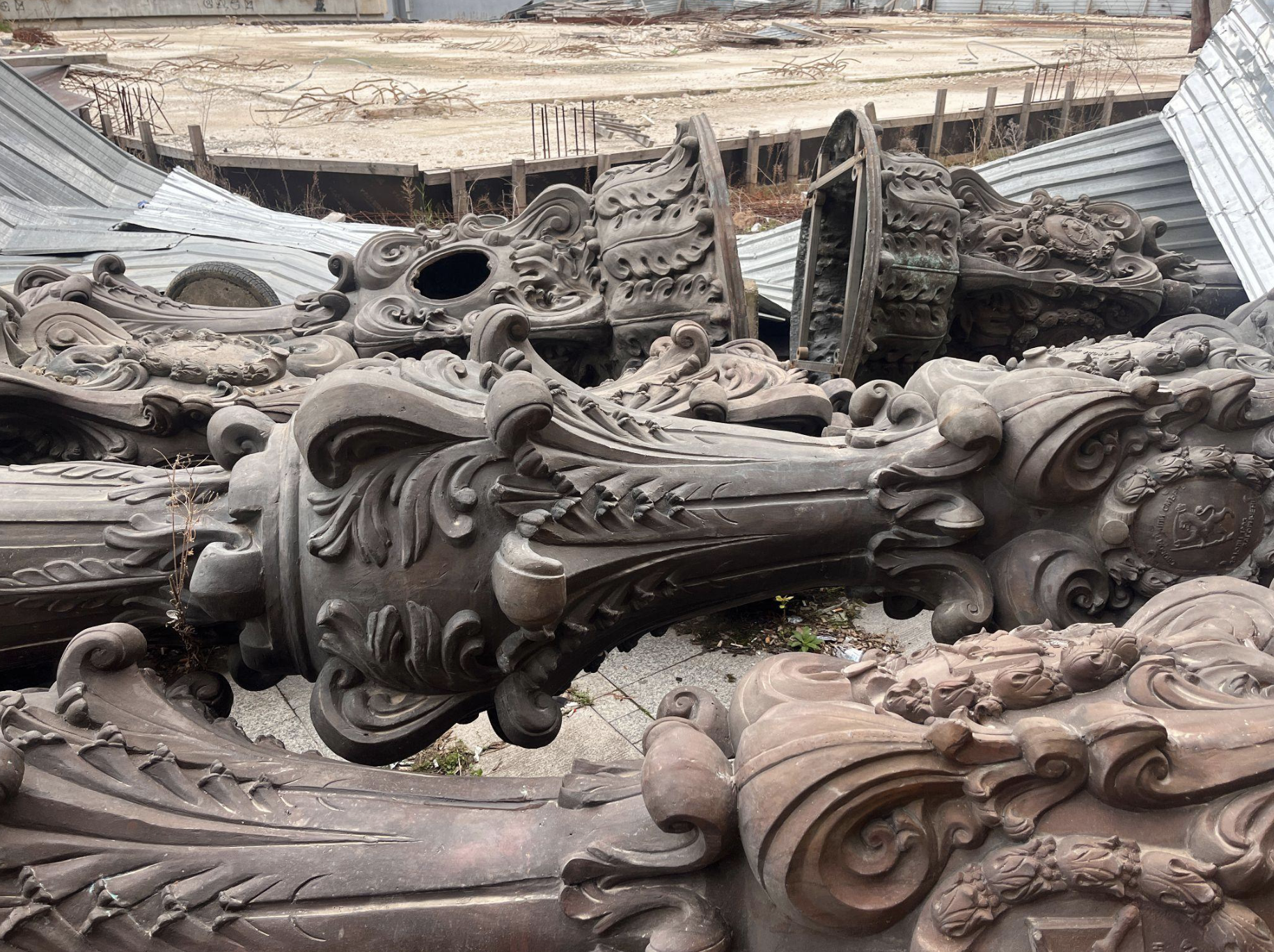
Winnie Herbstein’s research. Collapsed street city lamps from the project Skopje 2014. Photo by Winnie Herbstein.
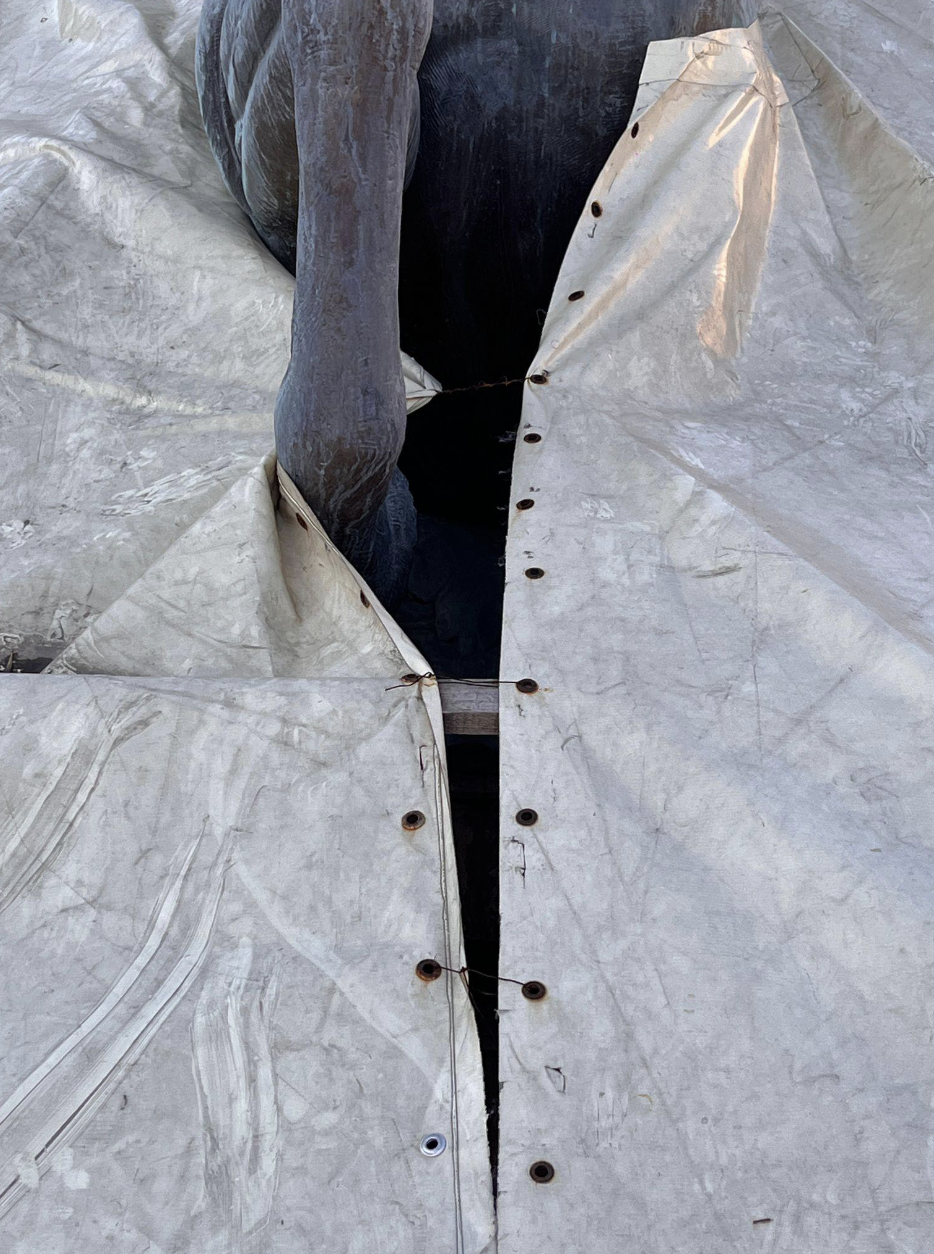
Winnie Herbstein's research, documenting the contested spaces of Skopje 2014. Photo by Winnie Herbstein.
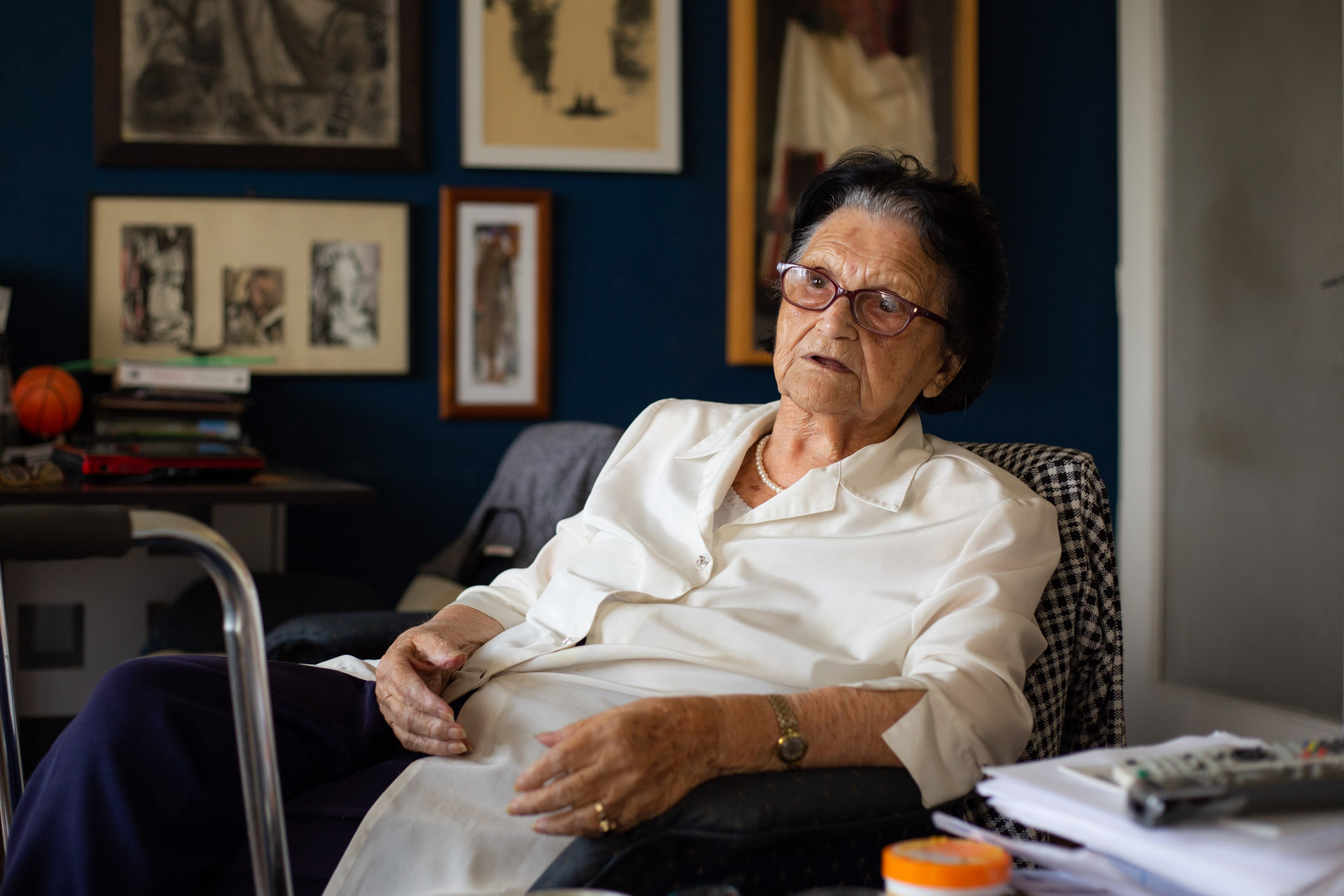
From Filip Jovanovski's archive. Visit to Mimoza Nestorova-Tomić, a Macedonian architect, urban planner, and designer who played a significant role in the masterplan and reconstruction of Skopje following the 1963 earthquake. Photo by Dragica Nikolovska.
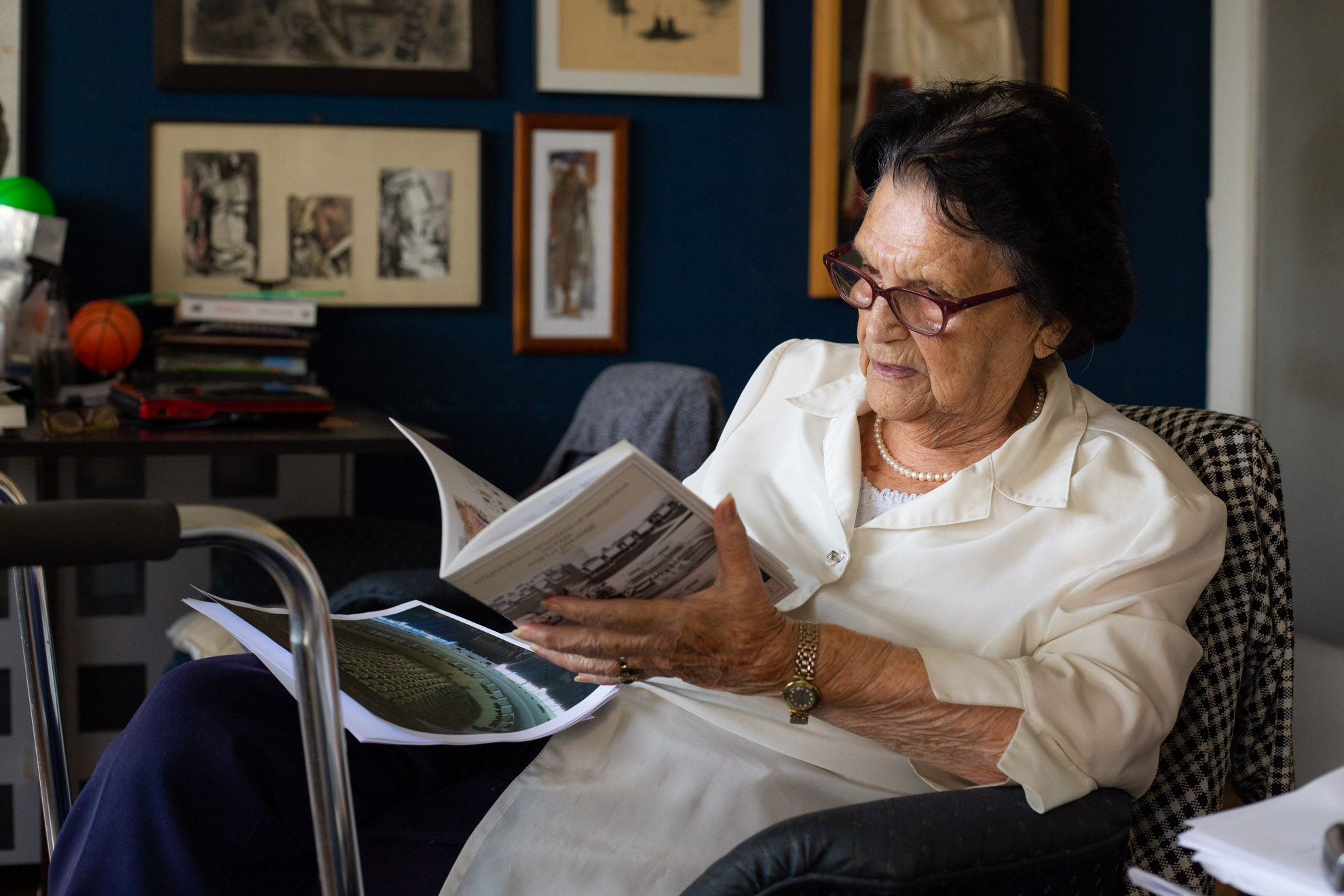
Mimoza Nestorova-Tomić. Photo by Dragica Nikolovska.
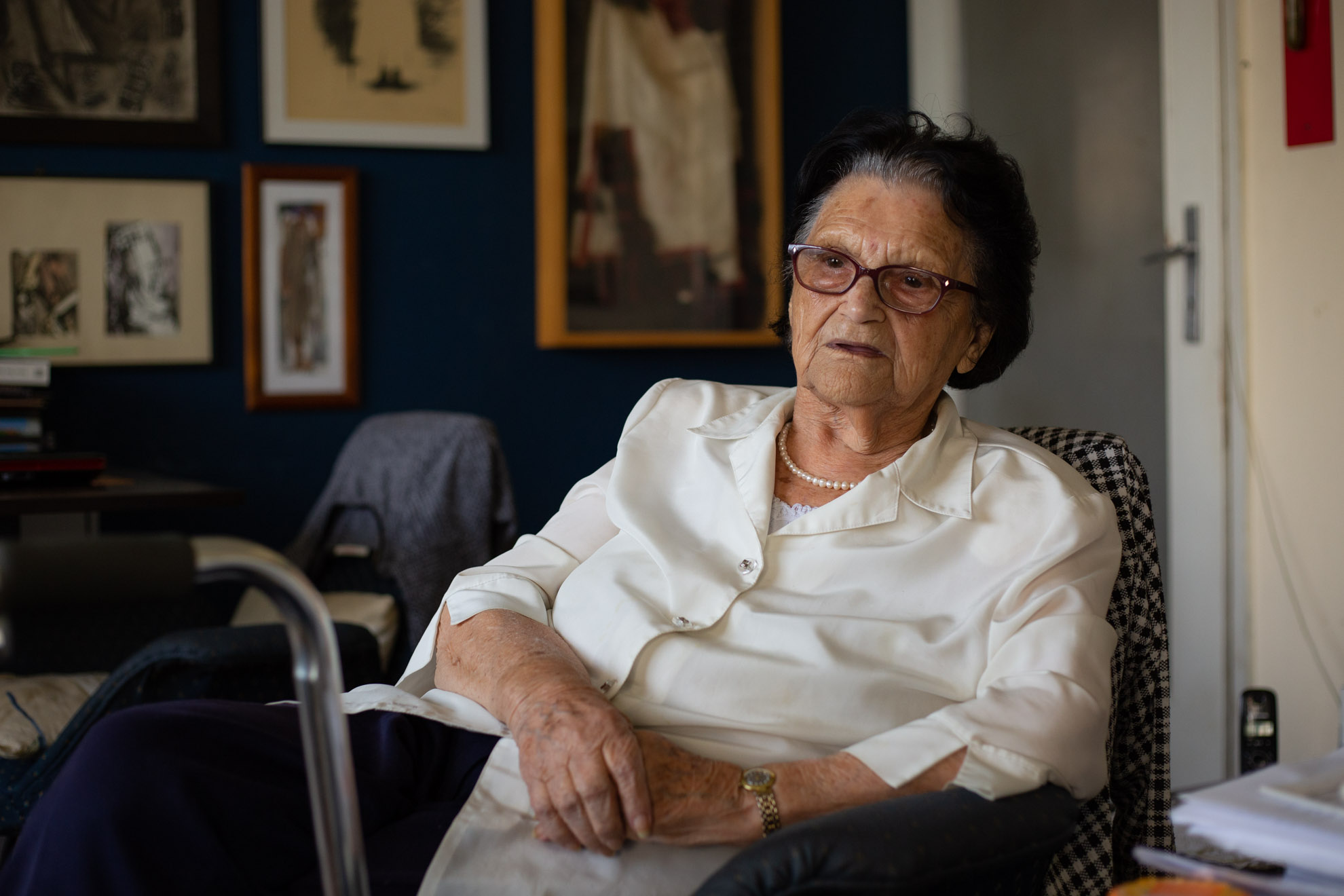
Mimoza Nestorova-Tomić. Photo by Dragica Nikolovska.
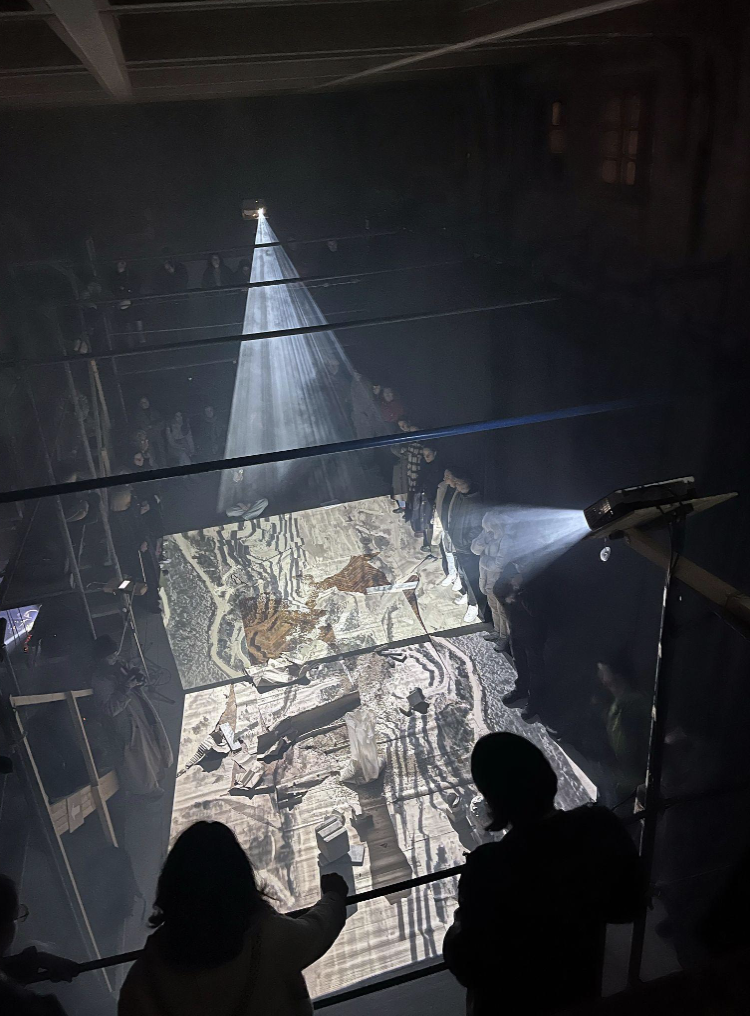
Anu Vahtra's visit to "The City as a Stage," a collaborative project in three acts by Filip Jovanovski, performed during the MOT festival in Skopje. Photo by Anu Vahtra.
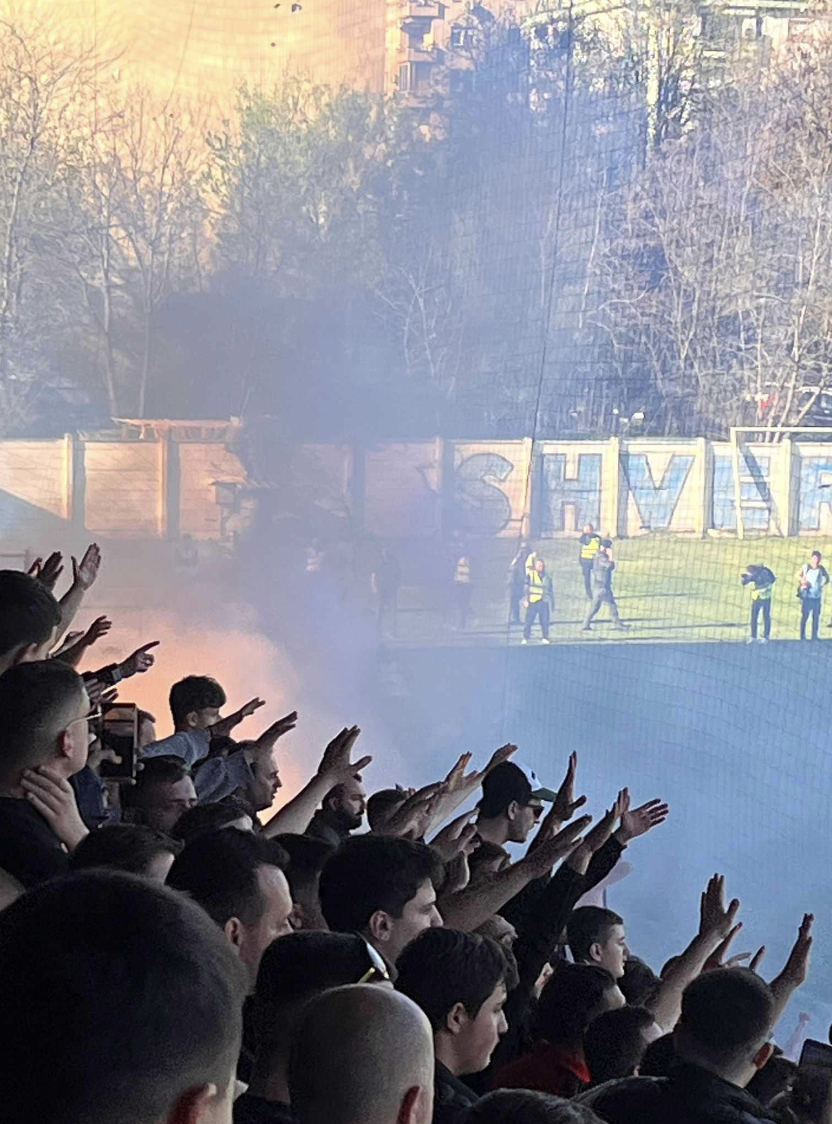
Winnie Herbstein's research. Photo by Winnie Herbstein.

Winnie Herbstein's research. Photo by Winnie Herbstein.
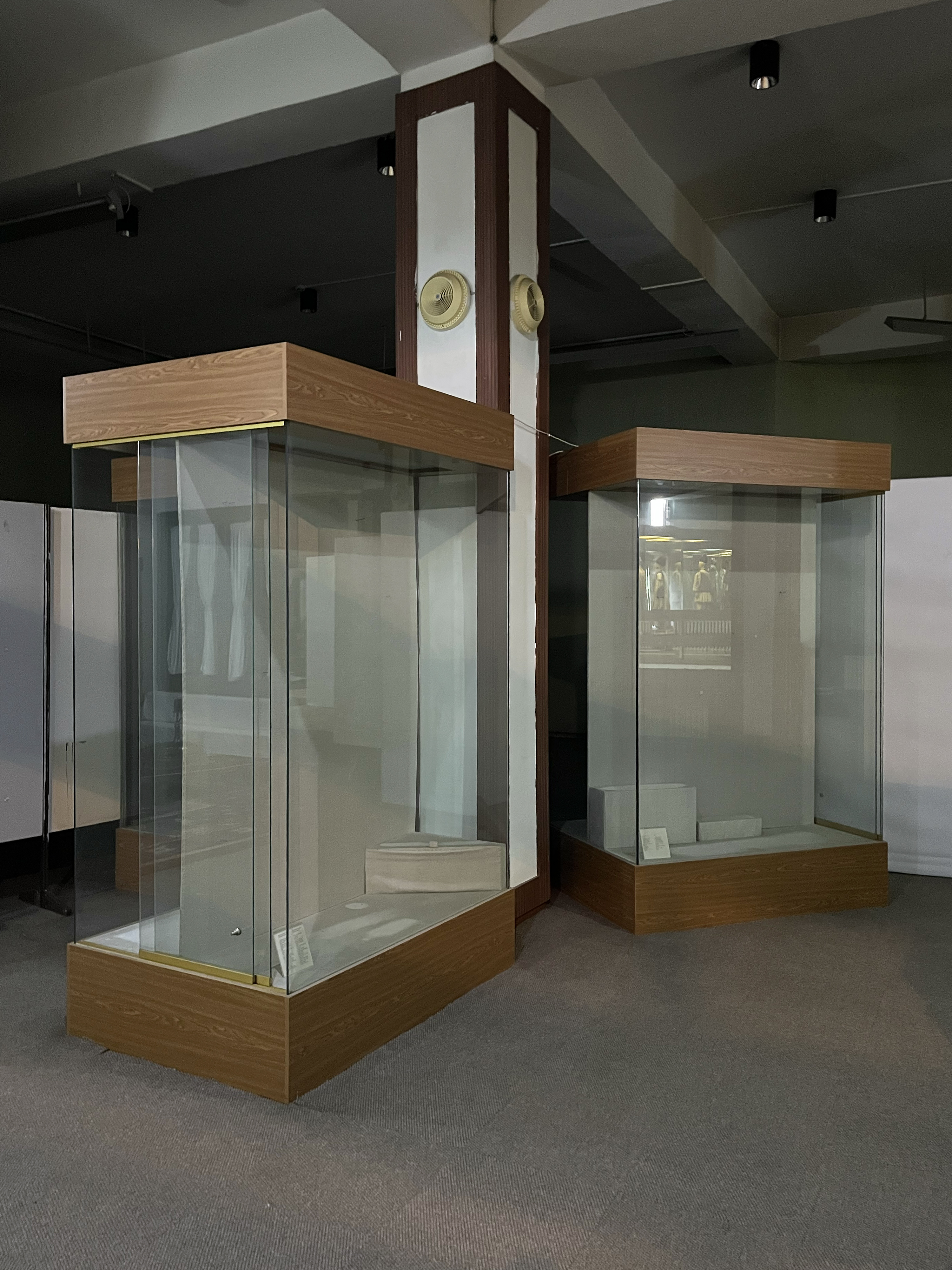
Anu Vahtra’s research, potential exhibition venues in Skopje. Photo by Anu Vahtra.
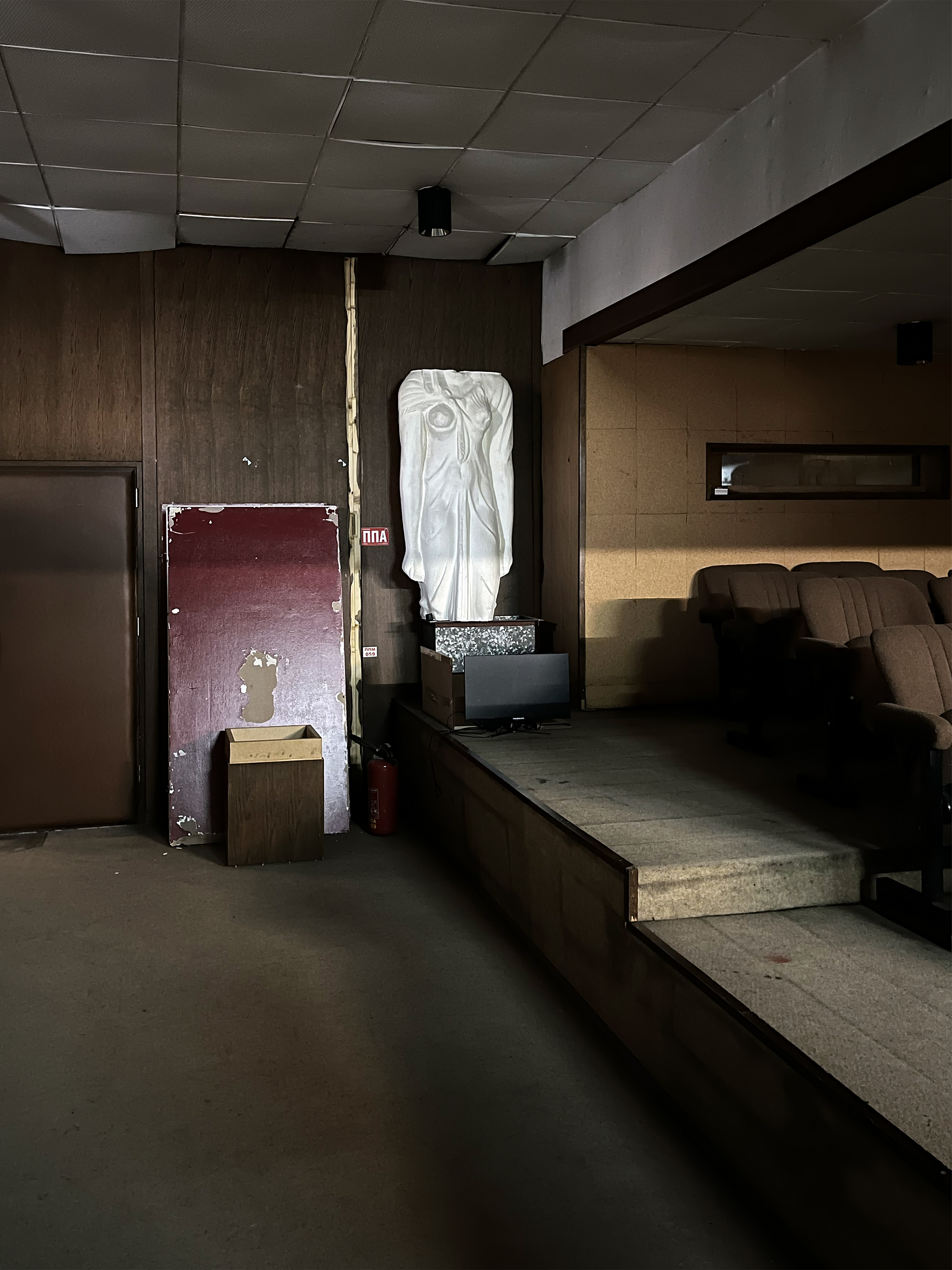
Anu Vahtra’s research, potential exhibition venues in Skopje. Photo by Anu Vahtra.
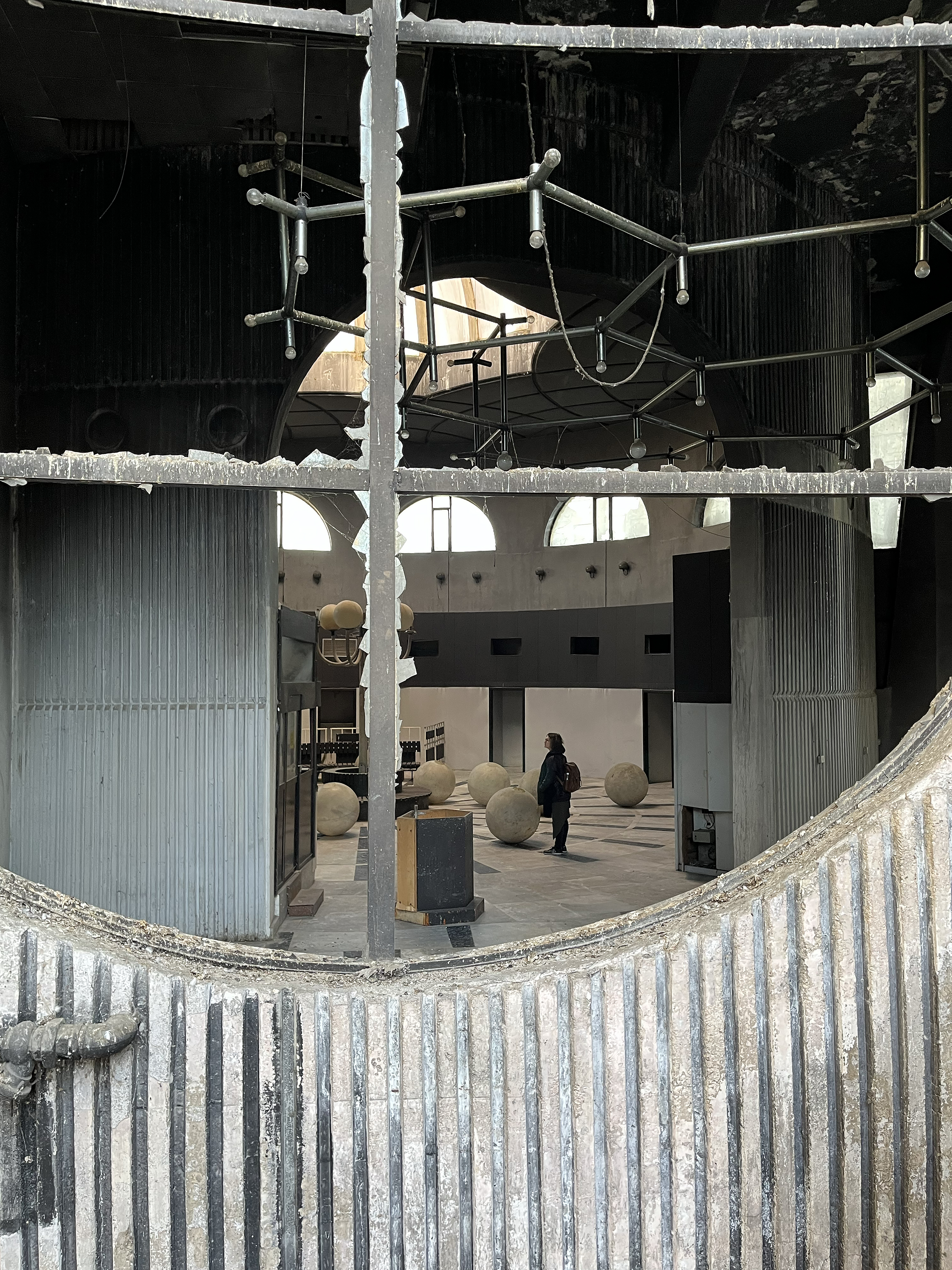
Anu Vahtra’s research, potential exhibition venues in Skopje. Photo by Anu Vahtra.
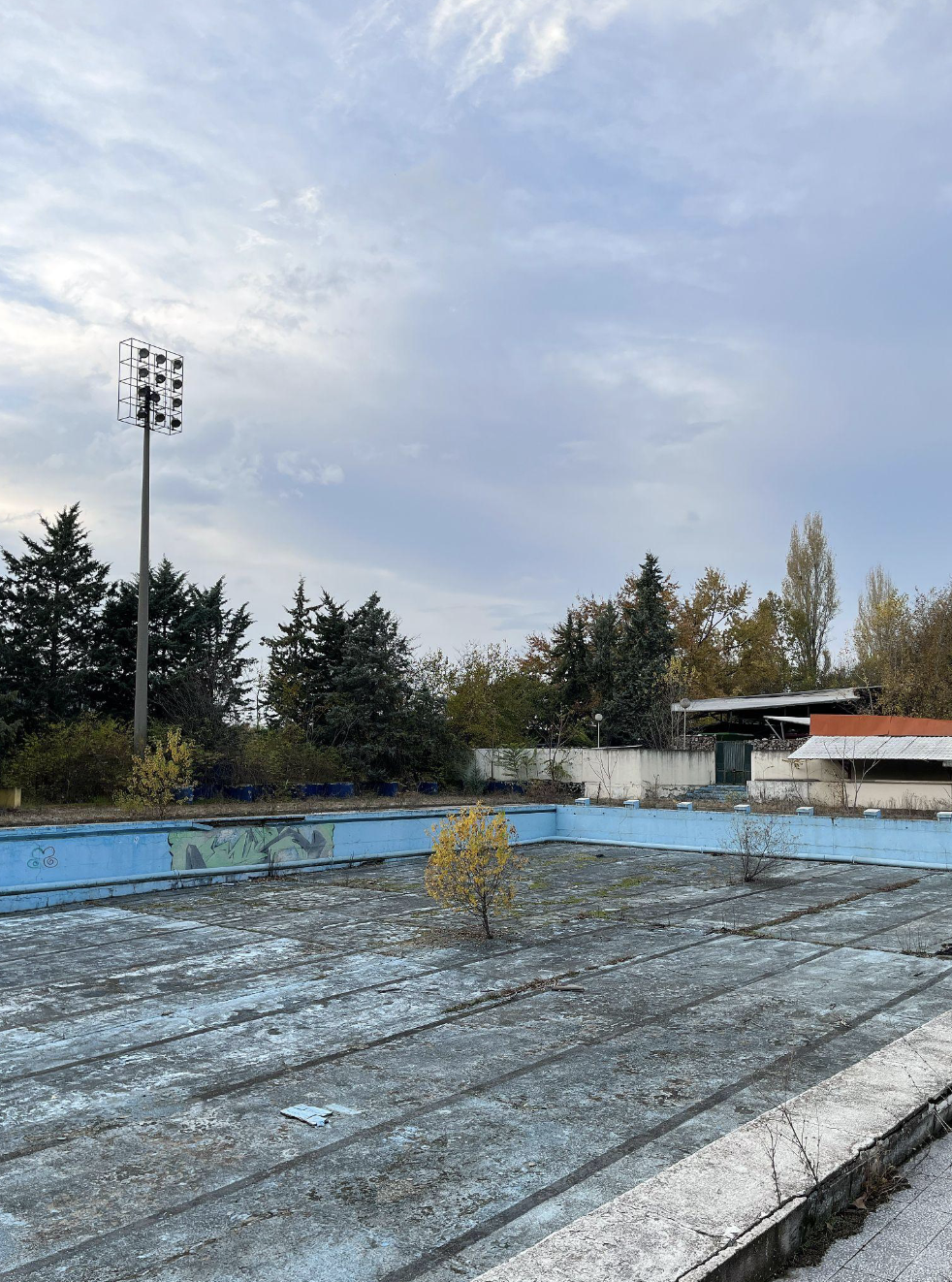
Anu Vahtra's research, documenting ongoing construction sites and vegetation reclaiming spaces across the city. Photo by Anu Vahtra.